


Is Methanol a Transition Fuel — or Shipping's Long-Term Answer?
Liquid at ambient conditions and easy to store, methanol is winning early orders — but it's toxic, flammable, and its climate case depends on where it's made.
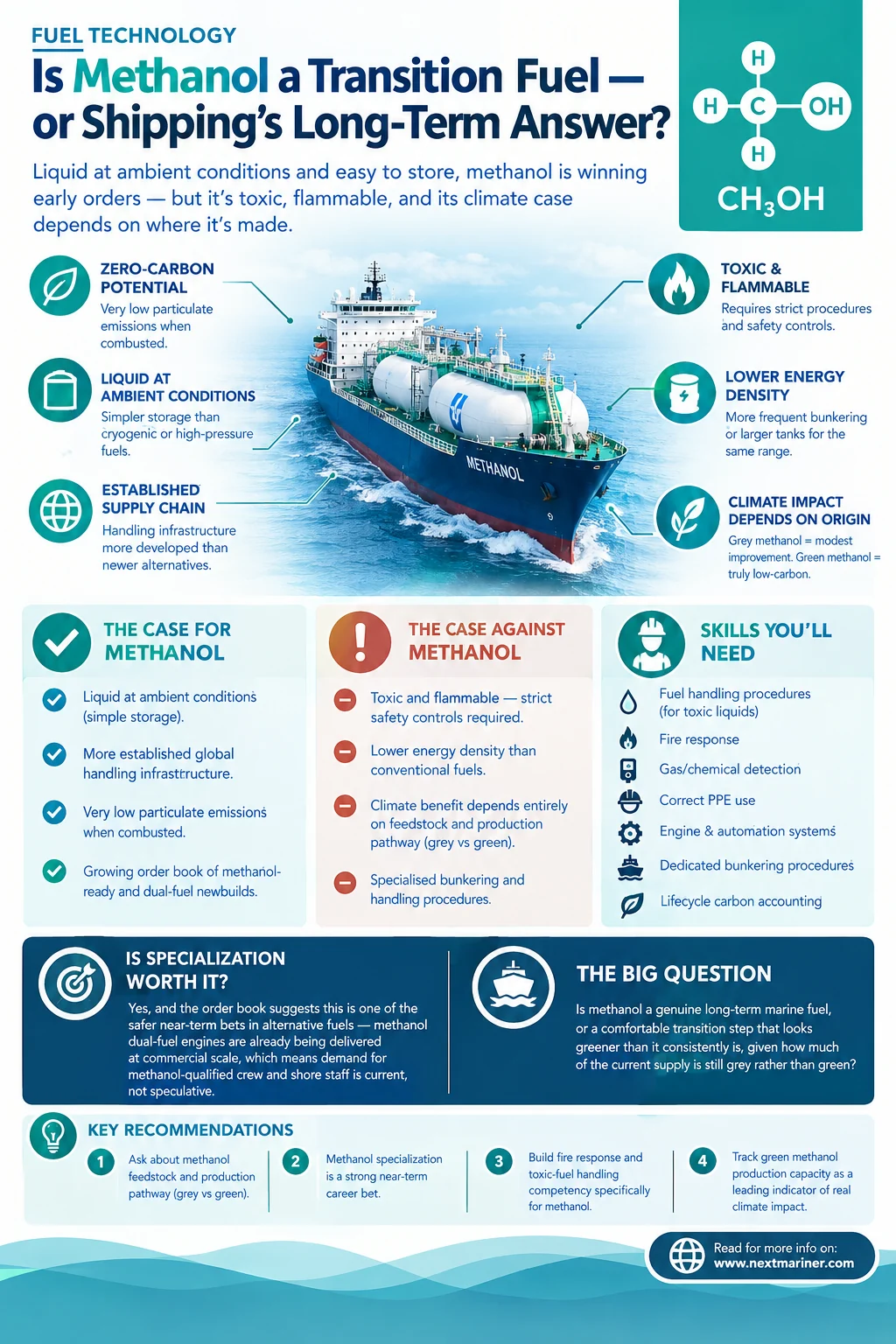
Methanol (CH3OH) has become one of the fastest-moving alternative fuels in shipping, with a growing order book of methanol-ready and dual-fuel newbuilds. Part of the appeal is practical: methanol behaves more like a conventional liquid fuel than almost any other alternative on this list.
The Case For Methanol
It's liquid at ambient conditions, which means comparatively simple storage compared to cryogenic or high-pressure fuels. Handling infrastructure is more established globally than for newer alternatives, and methanol produces very low particulate emissions when combusted.
The Case Against Methanol
Methanol is both toxic and flammable, requiring strict procedures and safety controls throughout handling and bunkering. It has lower energy density than conventional fuel oil, meaning more frequent bunkering or larger tanks for the same range. And critically, methanol's actual climate benefit depends entirely on its origin — "grey" methanol made from natural gas offers a modest improvement at best, while "green" or "bio" methanol made from renewable sources or captured carbon delivers a genuinely low-carbon fuel. Those are two very different products wearing the same name.