


Is Methanol a Transition Fuel — or Shipping's Long-Term Answer?
Liquid at ambient conditions and easy to store, methanol is winning early orders — but it's toxic, flammable, and its climate case depends on where it's made.
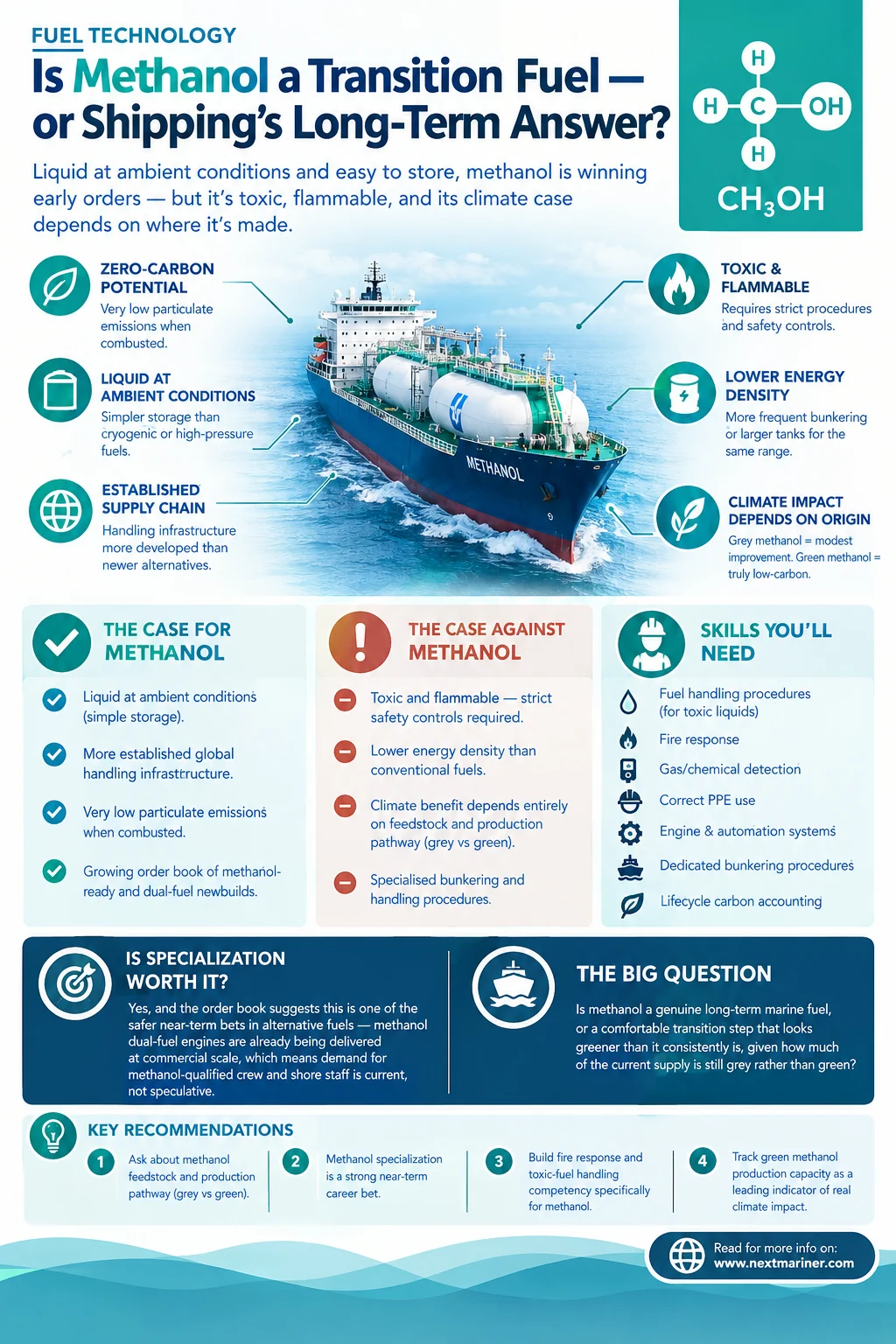
Methanol (CH3OH) has become one of the fastest-moving alternative fuels in shipping, with a growing order book of methanol-ready and dual-fuel newbuilds. Part of the appeal is practical: methanol behaves more like a conventional liquid fuel than almost any other alternative on this list.
The Case For Methanol
It's liquid at ambient conditions, which means comparatively simple storage compared to cryogenic or high-pressure fuels. Handling infrastructure is more established globally than for newer alternatives, and methanol produces very low particulate emissions when combusted.
The Case Against Methanol
Methanol is both toxic and flammable, requiring strict procedures and safety controls throughout handling and bunkering. It has lower energy density than conventional fuel oil, meaning more frequent bunkering or larger tanks for the same range. And critically, methanol's actual climate benefit depends entirely on its origin — "grey" methanol made from natural gas offers a modest improvement at best, while "green" or "bio" methanol made from renewable sources or captured carbon delivers a genuinely low-carbon fuel. Those are two very different products wearing the same name.
Skills You'll Need
Fuel handling procedures specific to a toxic liquid, fire response, gas and chemical detection, correct PPE use, engine and automation systems, dedicated bunkering procedures, and lifecycle carbon accounting to distinguish grey from green methanol in practice, not just on paper.
Is Specialization Worth It?
Yes, and the order book suggests this is one of the safer near-term bets in alternative fuels — methanol dual-fuel engines are already being delivered at commercial scale, which means demand for methanol-qualified crew and shore staff is current, not speculative.
What the Infographic Doesn't Tell You
The "is methanol green" question is arguably more important than any engineering detail, and it's the one most easily glossed over in marketing material. A vessel burning methanol tells you nothing about its actual carbon footprint without knowing the feedstock and production pathway behind the fuel in its tanks — that distinction deserves the same scrutiny biofuel sourcing gets, and currently doesn't always receive it.
The Debate
Is methanol a genuine long-term marine fuel, or a comfortable transition step that looks greener than it consistently is, given how much of the current supply is still grey rather than green?
Recommendations:
- Always ask about methanol feedstock and production pathway — grey and green methanol are not interchangeable when it comes to genuine climate impact.
- Methanol specialization is a strong near-term career bet given the current pace of newbuild orders and delivery.
- Build fire response and toxic-fuel handling competency specifically for methanol — it differs meaningfully from both conventional fuel oil and LNG procedures.
- Track green methanol production capacity as a leading indicator of whether the fuel's climate promise will actually scale with demand.
Learn & Earn
Want rewards and badges for reading?
Learn & Earn turns reading into Nautical Miles, badges and rank. Short lessons, quick quizzes, and a free account that keeps every mile you earn.
Responses
0Want to interact with an entire community?
Sign in to add a response, back the ones you agree with, and follow the people writing them.